Roof leak repair
Roof leak repair scheduled in Katy.
Roof leak repair in Katy →Katy sits west on I-10: City of Katy plus the larger Harris and Fort Bend (and, at the edge, Waller) MPC belt people mean when they say Katy. Cinco Ranch and the streets around it are slab-on-grade asphalt, not Heights bungalows. The primary service we pair with this city is storm damage. Secondary is shingle repair when the field is local.
Permit path is the first non-roof fact that matters. A lot inside City of Katy does not use the City of Houston counter. Unincorporated Harris or Fort Bend uses still another office. We note that on the walkthrough because a storm-opened ridge is the same physics either way and the paperwork is not.
Gulf thunderstorms and tropical-season wind run the same humid subtropical pattern as Houston. Wind-driven rain under tabs, ridges that lift, and the occasional limb are the usual call. Large hail is less of a yearly pattern than in North or West Texas. We inspect the field; we do not write a hail script because the sirens were loud. Hurricane season is June 1–November 30 (NOAA).
Housing here is mostly late-twentieth and early-twenty-first-century MPCs. Clay is still high-plasticity coastal material (Beaumont Clay and related units). It shows at chimneys and brick ledges on two-story houses, not as a reason to label every parcel with a USDA series name. If the storm call is really a repeating leak at a wall, we say so and move to leak repair.
Call (281) 562-7867 or use the quote form. We pick up during business hours and respond within one business day. A number comes after we see the roof. Price drivers on Katy streets are access in gated sections, stories, and how much ridge or field actually lifted.
Older streets closer to the historic Katy core are a different lid than a 2000s Cinco Ranch two-story. The core can still be asphalt, but the pitch, the chimney count, and the tree cover change. West of the Grand Parkway the fetch is more open: wind hits a ridge with less neighborhood shelter. That is why a storm call in one Katy ZIP is not automatically the same scope as the next. We walk the plane we were given.
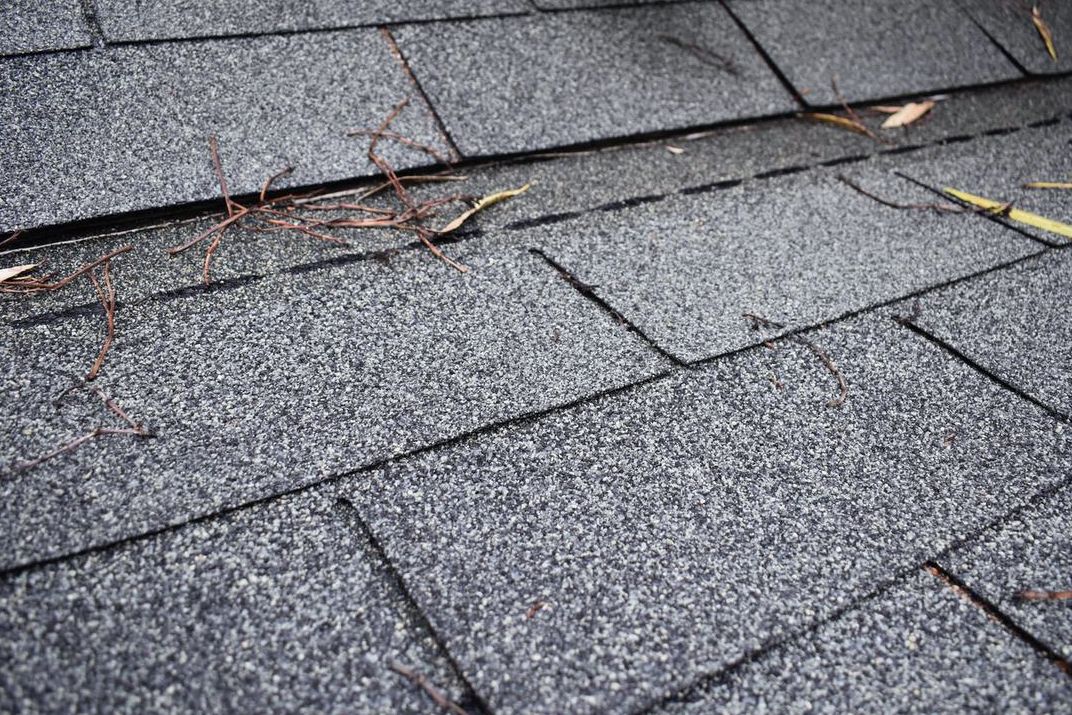
When shingles are on the lawn, we still check whether the rest of the field is already brittle. A local ridge close is shingle repair. A field that lifted in strips is storm. An opening you can see from the driveway is emergency first. We will not invent a dollar figure to “get on the calendar.” Drivers stay access, stories, decking, and how much ridge actually failed.
Hurricane season (June 1–November 30, NOAA) is when these streets fill the phone. That does not change hours language: we pick up during business hours and we schedule the visit. If you are in Fort Bend Katy versus Harris Katy, say the city on the water bill. The clay under both is still high-plasticity coastal material. It shows at brick ledges after a dry spell and a hard rain — a leak path that can look like “storm” if we never get on the wall flashing.
No. The page is Katy as people use it: the city and the I-10 west MPC belt in Harris and Fort Bend. Tell us the city on the water bill if you have it. We note the permit office from the address.
Long asphalt fields, exposure, and regular Harris thunderstorms. When the call is three tabs and a quiet week, shingle repair is the secondary path.
No. Age and product vary by section. Storm or shingle first unless the walkthrough shows a finished field.
Every Houston-level service has an inner page for Katy.
Roof leak repair scheduled in Katy.
Roof leak repair in Katy →Emergency roof repair scheduled in Katy.
Emergency roof repair in Katy →Storm damage scheduled in Katy.
Storm damage in Katy →Shingle repair scheduled in Katy.
Shingle repair in Katy →Roof replacement scheduled in Katy.
Roof replacement in Katy →Flat roof repair scheduled in Katy.
Flat roof repair in Katy →Metal roof repair scheduled in Katy.
Metal roof repair in Katy →Roof inspection scheduled in Katy.
Roof inspection in Katy →Commercial roofing scheduled in Katy.
Commercial roofing in Katy →