Metal roof repair in Houston is fasteners, seams, flashings, and panels that have moved or corroded — not a promise to “seal the whole barn” from the street. East of downtown, toward the Ship Channel and the East End, metal is a normal lid on shops, warehouses, and some houses. West MPC streets are still mostly asphalt. We go where the panel is.
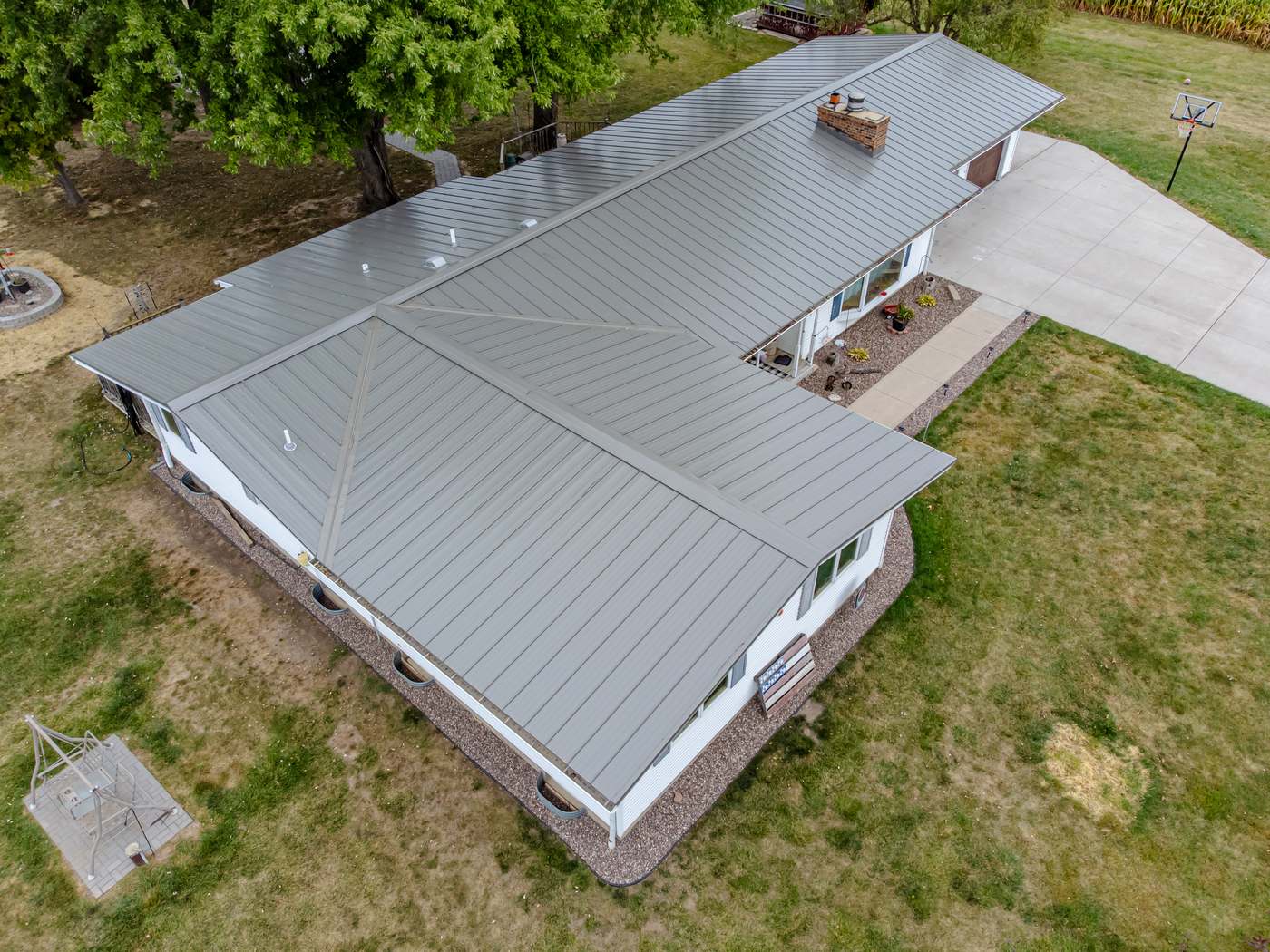
East End (77011 / 77003 / 77023) is the district pair: Harrisburg, Navigation, Eastwood. Secondary service there is commercial roofing because so many lids are business or mixed. Pasadena’s 1940s–50s housing plus refinery-adjacent commercial is leak- and commercial-primary; metal shows up on the industrial neighbor more than on every bungalow.
Coastal humidity and industrial air are hard on exposed fasteners and cut edges. Expansion on a long panel in Gulf heat opens a hole that was tight in January. We look at rubber washers, ridge closures, wall flashings, and any penetration that was sealed with a product that does not belong on metal. We do not invent a coating brand as a cure-all.
Price drivers are panel length, height, fastener count, whether a panel must be replaced, and access on industrial sites. No dollar amounts on this page. Call (281) 562-7867 or use the quote form and mark commercial if the lid is a business.
East End mixed-use blocks are why this service sits next to commercial on the IA. A house porch in standing seam and a shop in through-fastened panels are both metal and they are not the same repair. We ask which. Channel humidity keeps washers wet. Gulf heat moves long panels. A fastener that was tight in winter is the hole that stains a ceiling in June. That is the walkthrough, not a coating speech from the street.
We photograph fastener rows, ridge closures, and the wall the panel meets. Clay can open that wall on a masonry shop as surely as on a bungalow. If the lid is mostly drains and membrane, we switch to commercial or flat. If the panel is gone after wind, emergency first. No per-panel menu lives here. Drivers stay length, height, washer condition, and access off Harrisburg or a Channel-adjacent lot. (281) 562-7867.
The Houston factor
Humid subtropical air and Gulf moisture sit on metal for much of the year. Rain and wind-driven rain find a fastener hole or a failed closure. Ponding is less of a steep standing-seam story and more of a low-slope metal deck story — common on east industrial. Hurricane season June 1–November 30 (NOAA) is wind on edges and ridges. Annual precip near fifty inches (published, station-dependent) keeps washers wet.
Harvey (August 2017) is the extreme rain benchmark; commonly published IAH multi-day totals are mid-thirty-inch class. Hail is less frequent than in North or West Texas, but a hail-dented panel is still a panel we would photograph rather than guess. Algae is an asphalt headline; on metal the surface story is oxidation and debris at laps. Clay movement at a masonry wall still opens the flashing a panel meets. Ship Channel / east industrial is why this service exists on the launch IA.
Metal, commercial, or emergency
An open panel after wind is emergency first. A planned lid on a business may be commercial. A house with a metal porch and asphalt field may need both metal and shingle repair scoped separately.
Questions about metal repair
Can you fix a metal roof by coating it from the ground?
A coating is not a diagnosis. We look at fasteners, laps, and flashings. Some lids need mechanical repair. We do not sell a spray as a substitute for a walkthrough.
Why is the East End the metal district on this site?
Harrisburg, Navigation, and Eastwood mix houses with shops and older commercial lids. Metal is a normal plane there. West MPCs are mostly asphalt.
Do refinery neighbors change the repair?
Industrial air and humidity are hard on cut edges and fasteners. The scope is still the panel in front of us. We do not invent a special chemical rating we have not specified.
Will you quote per panel on the website?
No. Drivers are length, height, fastener condition, and access. The number is after we see the lid.
Is a noisy metal roof a leak?
Not by itself. Expansion noise is common in Gulf heat. Leak is water inside. We separate those on the visit.
Metal roof repair by city
Inner pages for this service in each city hub:
Katy Sugar Land Pearland Cypress The Woodlands Pasadena Houston Heights Memorial Montrose Energy Corridor East End Meyerland Spring Humble Tomball Conroe Missouri City Richmond Rosenberg League City Friendswood Baytown Galveston Texas City Alvin Stafford Bellaire