After a storm in Houston you repair when lifted or missing tabs are local and the deck is closed; you replace when a slope or the whole field is finished, wood is wet or exposed, or the roof was already at the end and the storm only finished the argument. This is a hail-and-wind threshold question, not the general repair-or-replace essays elsewhere on this blog. Start on storm damage in Cypress or Katy; use emergency roof repair if you can see an opening from the yard.
Sequence after the cell: steps after roof damage, then this fork. Insurance is a separate coverage question from whether the field can still work. IBHS hail impact research on asphalt shingles is science, not a Houston claim file. Local forecasts sit with National Weather Service Houston/Galveston.
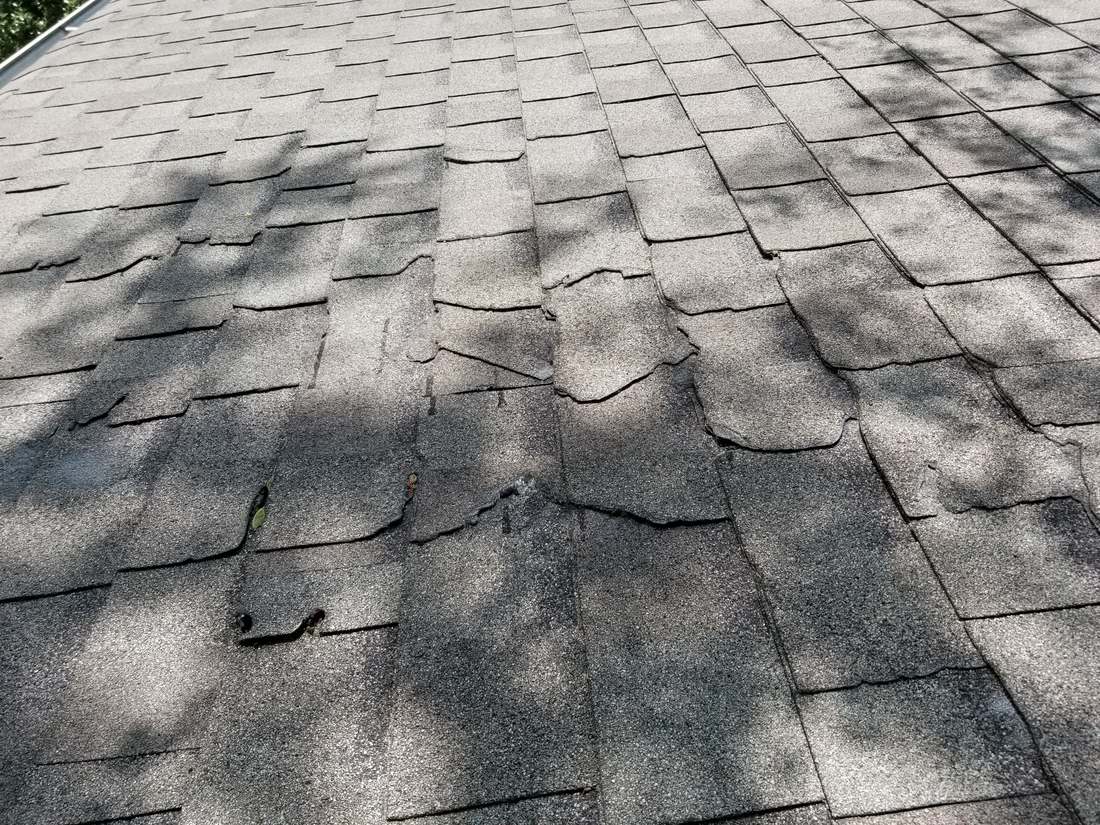
Wind thresholds we actually use: a handful of tabs or a ridge cap run on an otherwise honest field is repair. A slope that lost courses, a ridge that peeled, or lift across more than a local eave is a larger storm scope and may be replacement if the rest of the lid was already creased. Hail thresholds: bruises that break the mat, not algae spots, and not every loud thunderstorm. Large hail is less frequent here than in North or West Texas. We look at the shingles, not the weather app headline. Call (281) 562-7867 or request a walkthrough.
Do not use Gloeocapsa streaks as a hail threshold. Do not use needles in Memorial valleys as a wind threshold. Do not use a clay-racked ridge as a tornado story. Those are Houston false positives. True positives: creased tabs that stay creased, missing caps, exposed felt, daylight, wet attic wood, and a field that was already an overlay. One-slope repair is common when wind had a direction. We still check the ridge and the opposite eave. A single-slope photo is not a full scope.
Sequence after the storm: safety and indoor steps, photos, tarp if open, then this fork. If the house was in a Pearland or Energy Corridor replace window already, the storm may push you over — we will still say what is old. If the house is a newer Cypress MPC with local lift, replacement talk is usually sales theater. We photograph rather than flatten every thunderstorm into a full field. No fake hail-day counts. No dollar menu for either fork.
Insurance is a separate article. Thresholds on the lid are this one. Matching, deductibles, and ACV are policy language. Our language is wood, field, and how much asphalt can still work in wind-driven rain. Hurricane season stacks ordinary storms; it does not change the fork. A named system does not automatically retire every roof in Harris County. We walk the one we were called to.
The Houston factor
Humid subtropical / Gulf. Everyday storm failure is rain and wind-driven rain, plus ponding on low-slope attachments — not a hail-only narrative. Hurricane season June 1–November 30 (NOAA). Harvey in August 2017 was extreme rain; commonly published IAH multi-day totals sit in the mid-thirty-inch range. We do not invent subdivision totals.
Large hail is less frequent than in North or West Texas (Houston Chronicle / NOAA Storm Events). We will not repeat “8–12 hail days per year.” Algae on shaded asphalt can be mistaken for hail bruising. Pine needles look like storm debris after every blow. Clay movement can make a ridge look storm-twisted. After-storm thresholds have to subtract those before anyone says replace.
A storm fork you can remember
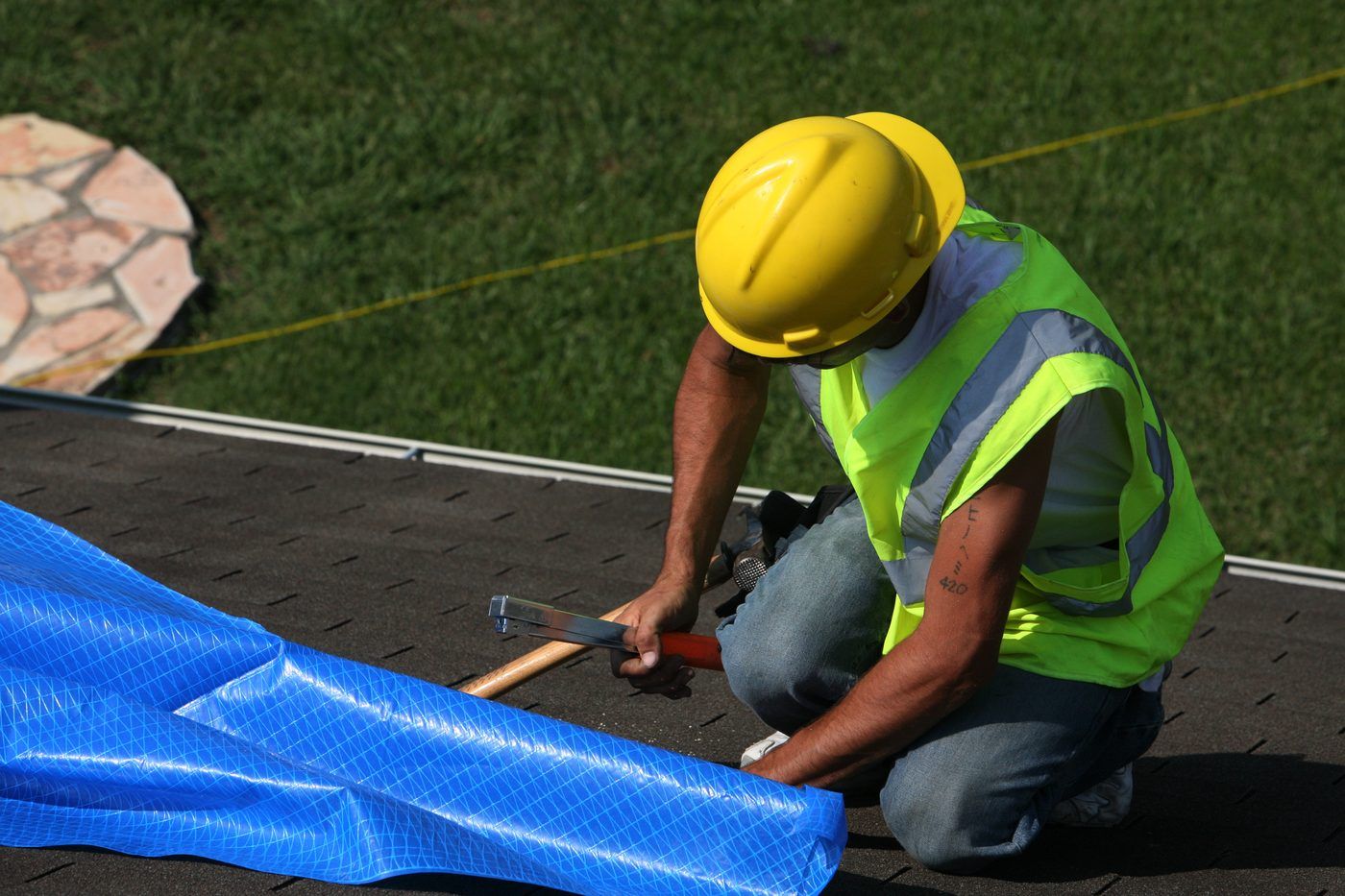
Opening you can see: emergency close, then this fork. Local lift, sound deck, honest field: repair. Exposed wood, widespread crease, overlay plus storm, or a slope that is gone: replacement conversation. Algae, needles, and clay: not the fork. Cypress and Katy calls often start as the first honest repair. Energy Corridor age windows may already be the third. We will not merge them into one storm package.
Does one hailstorm mean I must replace in Houston?
No. Hail that actually breaks the mat on a wide field can push replacement. A loud storm with algae spots cannot. We inspect the shingles. Houston’s yearly pattern is wind and rain more than hail. Threshold is damage on the lid, not the siren. If only one slope bruised, we still check the rest — we do not invent a full field from the news.
How much wind lift is too much to repair?
When courses are gone, felt is exposed, or the remaining tabs are already creased across the plane, repair is a delay. A handful of tabs on a flexible field is still shingle or storm repair. There is no website percentage we will fake. Cypress and Katy ridges fail first in fetch across MPCs. We count what lifted after we are on the roof.
What if the roof was already old before the storm?
Then the storm may be the last event, not the only cause. We say what is wear and what is new lift. Pearland and Energy Corridor windows live here. Replacement can be honest without pretending every tab is hail. Repair can still be honest if the failure is local. The after-storm knowing is that split, written down, not a ZIP-code reroof.
Call (281) 562-7867 during business hours or request a walkthrough. We pick up Mon–Fri and schedule a tarp or visit from there — no around-the-clock crew claim.